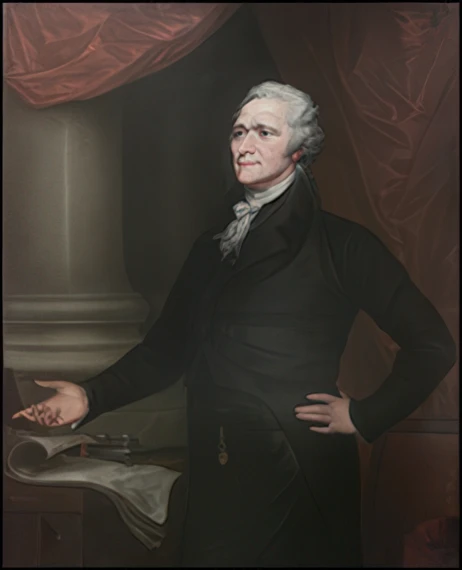
Alexander Hamilton was the new nation’s first Treasury Secretary and the first of two men to serve in that position under George Washington. He was born out of wedlock in 1755 or 1757 on the island of Nevis in the British West Indies to Rachel Lavien and Scottish peddler James A. Hamilton. He clerked for the mercantile firm of Beekman and Cruger on the island of St. Croix before heading for the mainland in 1772. After preparing for college in Elizabethtown, New Jersey, he attended Columbia University (then King’s College) in Manhattan.
The precocious youth defended the colonists’ increasing resistance to British rule in pamphlets published in 1774, and when hostilities broke out the following year he quickly joined the rebel forces as an artillery officer. After serving with bravery and distinction in several crucial early engagements in New York and New Jersey, Hamilton joined General Washington’s staff at the Continental Army’s headquarters. Late in the war, Hamilton again commanded a combat unit and played a major role in the victory at Yorktown.
Due in part to the deprivations he and his men suffered during the war at the hands of inept leaders, a battered economy and a weak frame of government (the Articles of Confederation), Hamilton became a nationalist – a group that wanted to forge a stronger central government and a more vital economy. He therefore helped to form the Bank of New York, practiced law in what he believed to be the public interest and called for the creation of a new constitution. Thanks in large part to his efforts, a constitutional convention met in Philadelphia. Blocked by his fellow New York delegates, Hamilton contributed little to the final document, but as one of the authors of The Federalist Papers he helped to ensure its ratification.
After ratification, Hamilton helped to implement the Constitution by serving as Treasury Secretary. During his term in office, Hamilton essentially restored the national government’s credit, created an efficient tariff-based revenue system and jump-started the development of America’s capital markets.
After leaving office, Hamilton resumed practicing law and remained an active advisor to Treasury and the Federalist party that his policies helped to forge. He died after being shot by political nemesis Aaron Burr in a duel in July 1804 and, fittingly, is buried in the Trinity Church cemetery near Wall Street in Manhattan.
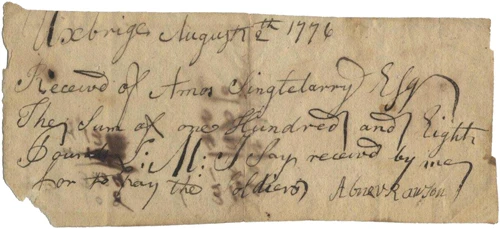
When Washington was first inaugurated President in April 1789, the US federal government was new and essentially bankrupt due to the debts it inherited, per Article VI of the Constitution of 1787, from the previous government. That government had run into debt fighting the American Revolution and could not begin to repay it after the war because its ability to tax was severely restricted by the Articles of Confederation and a stagnant economy. Its myriad bonds traded at pennies on the dollar in illiquid and inefficient markets. The debt was considered so onerous that a few people spoke of repudiation, at least of the domestically-held portion of it.
When Washington left office in March 1797, the federal government’s bonds had been consolidated into just three types that traded at or near their par (face value) in efficient, liquid, broker-dealer markets in Boston, New York, Philadelphia and elsewhere. Yields were sometimes only slightly higher than on British Consols, but the bonds still attracted significant foreign investment. Although the nominal level of the debt rose slightly during Washington’s two terms, robust economic growth meant that many Americans began to consider the debt more of a blessing than a burden because it helped to cement the interests of thousands of bondholders, many influential at home or abroad, to the new national government.
The sea change in the nation’s finances was made possible by the reform program of Treasury Secretary Alexander Hamilton, a compliant Congress and Washington’s firm leadership. With Hamilton’s urging, the federal government established revenues from tariffs, tonnage duties and other sources that it dedicated to the repayment of new bonds issued in exchange for the mishmash of instruments issued by the federal and state governments during and since the Revolutionary War. The federal government also chartered a central bank, the Bank of the United States (1791-1811), to help it to smooth its cash flows and to make interest payments on the new bonds. That bank also helped to generate economic growth by providing merchants and other businesses with short-term loans and by promoting macroeconomic stability.
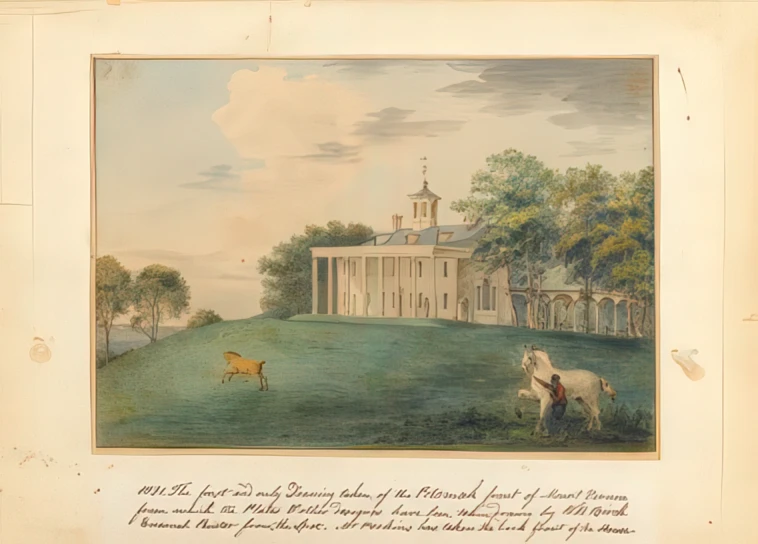
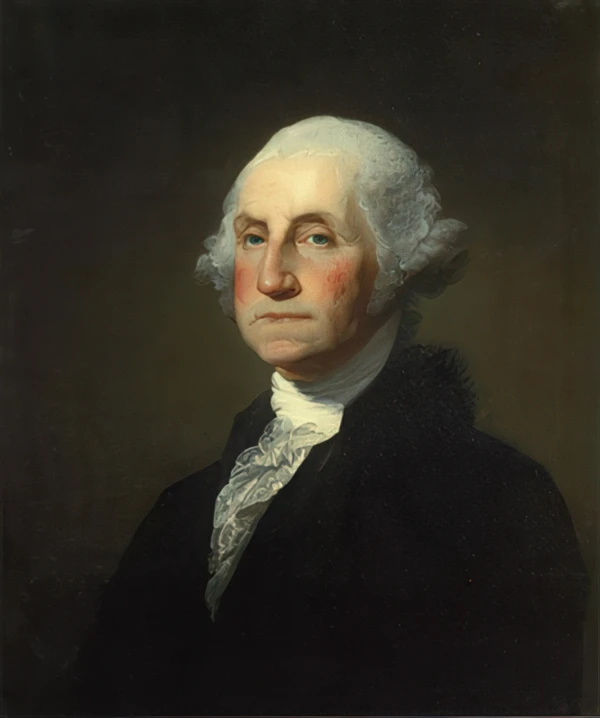
When not at war or presiding over the new nation in the capital (first New York, then Philadelphia), Washington lived on his plantation estate, Mount Vernon, on the western bank of the Potomac River near Alexandria, Virginia. (It is just 16 miles south of the nation’s current capital, Washington DC.) In the 1750s, the young Washington inherited an interest in the plantation from his half brother, Lawrence. He soon bought out the other interest, that of his brother’s widow, and with the help of slave laborers rebuilt the mansion house in a neoclassical Georgian architectural style on bluffs affording stunning views of the Potomac River valley below. Washington also expanded the plantation’s acreage by buying up adjacent and nearby farms as they came on the market.
Washington managed the sprawling grounds carefully and kept meticulous records. Like many large plantations, Mt. Vernon was highly diversified. In addition to major cash crops, at first tobacco and later wheat, the grounds were also used to produce hemp, flax, maize and several score other crops. Its gristmill produced cornmeal and flour, its blacksmith shop customized iron wares, and from a distillery erected in 1797 flowed prodigious quantities of whiskey. A small fleet of boats netted fish for both the plantation’s tables and its cash box. Washington and his slaves and hired hands also raised horses, sheep and other livestock on the grounds.
Washington never renamed the plantation even though it was named in honor of a British admiral during the War of Jenkins’ Ear (1739-1748). After Washington’s death, mismanagement led to the plantation’s slow decline until 1858, when it was purchased for $200,000 by the Mount Vernon Ladies’ Association. Superintendents like Harrison Dodge restored the grounds’ extensive landscaping and its many buildings and helped to recover historic artifacts. Today, the Association operates an extensive living museum on the site. In 1960, the plantation, which now contains about 500 acres, was designated a National Historic Landmark.
Washington’s Mount Vernon estate was nicely situated on the Potomac River for easy access to the sea and, hence, world markets. By the late 18th century, such convenient locations, and many acres less favorably situated, were already under the plow. As America’s population continued to swell, the fertile interior west of the Appalachian Mountains would have to be farmed if the nation were to remain an agrarian republic. To entice settlement on those lands, a cheap, easy and secure method for connecting them to world markets would have to be found. And to ensure that the frontier people remained loyal to the United States, those transportation routes would have to run over or through the mountains. Realizing all that, Washington purchased thousands of acres inland and then sought to link them economically and politically to the Chesapeake via the watery highway that ran through his front lawn.
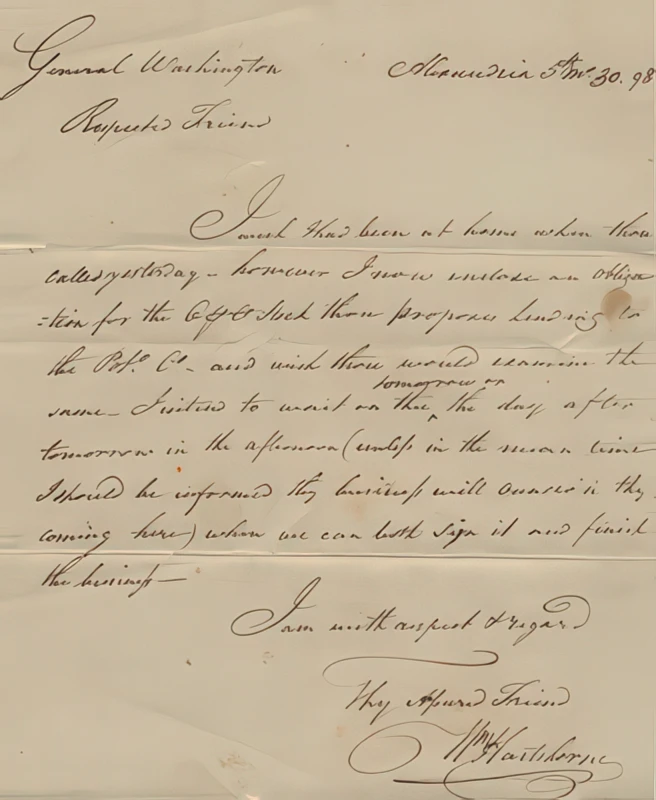
The Potomack Company (spelled in myriad ways) was one of several early largely private attempts to connect western farms and forests to eastern marts. A joint-stock company chartered by both Virginia and Maryland in 1784, it charged shippers tolls to use the five canals it built around the otherwise impassable spots on the Potomac River, saving shippers untold time and trouble porting their cargo and boats around waterfalls and other rough spots.
Washington invested in the endeavor and served until 1788 as its first president. Due to a dearth of technical skill, labor and cash, as well as a surfeit of lawsuits, progress was slow. The Company’s biggest accomplishment, circumventing the “Great Falls,” was not completed until early 1802, a little over two years after Washington’s death. Even then, however, the company did not do well financially because the water level was erratic and low. The Company relinquished its charter rights to the Chesapeake and Ohio Canal Company in 1828 and ceased operations.
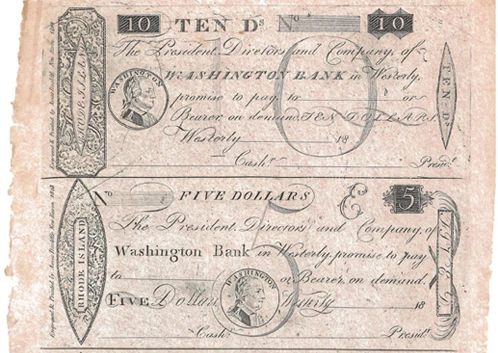
Washington’s legacy is immense and immensely variegated. Known to many as the “father of his country,” Washington’s name or face adorns the federal capital, a holiday, two currency denominations ($1 Federal Reserve note, 25 cent Treasury coin), various stamps, a massive piece of carved stone in South Dakota called Mount Rushmore and a 555-foot obelisk on the mall in the nation’s capital. It has also graced numerous private banks and/or their notes, moralistic stories (about cherry trees and what not), place names from hamlets to mountains to an entire state, innumerable streets, boulevards and avenues, and four colleges and universities.
Like most 18th and early 19th century Virginia planters, Washington was asset rich but cash poor. His assets were partially earned through work (surveying, officer salary), financial investments (personal bonds and some corporate equities) and the net proceeds of his plantation (Mt. Vernon), and partially inherited from his own family and that of his wealthy widowed wife, Martha Dandridge Custis.
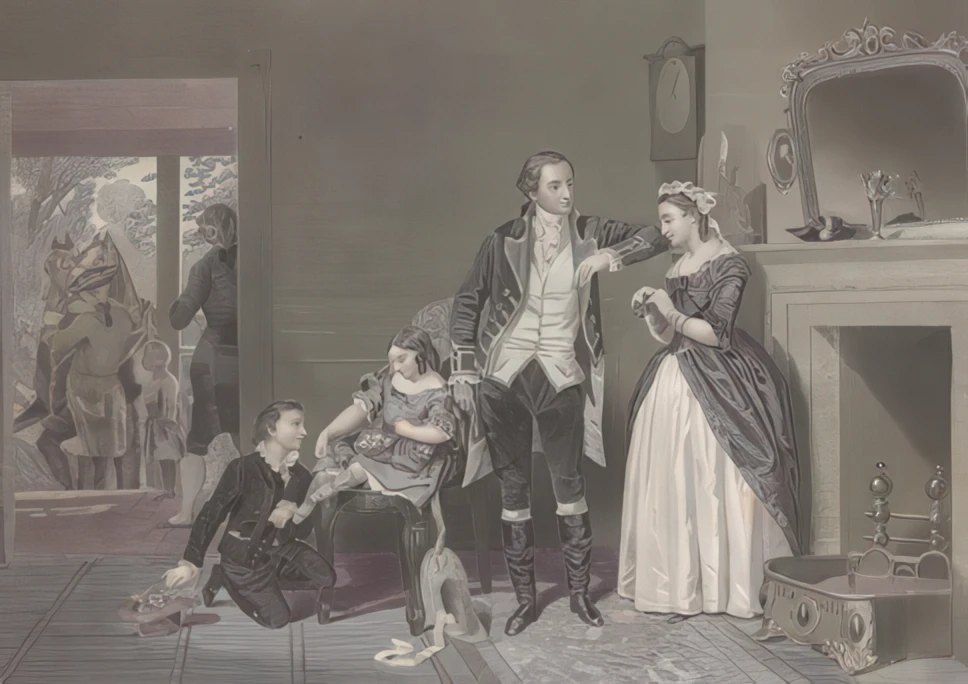
Washington’s most important assets included his real estate holdings and his slaves, but he also owned a large array of valuable luxury goods including a chariot custom-made in London, a collection of silver utensils, a variety of fine china and expensive clothing. He also maintained large stocks of valuable foodstuffs, including 124-pound cheese wheels and pipes (100 plus gallons) of Madeira wine, but those were usually quickly consumed. He never had children of his own but supported two of Martha’s children and two of her grandchildren and, like any proper gentleman of his day, entertained frequently and lavishly.
Washington was an excellent plantation manager by the standards of his day, but the profits generated by Mt. Vernon were not as high as they would have been had he not devoted much of his adult life to winning the Revolution as commander-in-chief and securing its legacy, and his own, as a two-term President. The aging of Washington’s slaves also limited the plantation’s profits because increasing amounts of resources were diverted to care for superannuated bondsmen who Washington refused to sell if it meant breaking up families. Washington was financially secure enough, however, to initially refuse acceptance of his presidential salary of $25,000 per year.
Due to his family’s expensive tastes and lifestyle, Washington sometimes had to borrow in anticipation of harvest (first of tobacco, later of wheat) or the sale of an asset, but unlike some planters (e.g., Thomas Jefferson) the value of his assets usually swamped the sum of his debts. In fact, Washington’s net worth, exclusive of Mt. Vernon, was estimated at his death in December 1799 at over half a million dollars, making him one of the richest men in America at the time. Although most of his wealth was tied up in illiquid western lands, Washington at his death was able to manumit about half of his slaves, the ones that he owned outright.
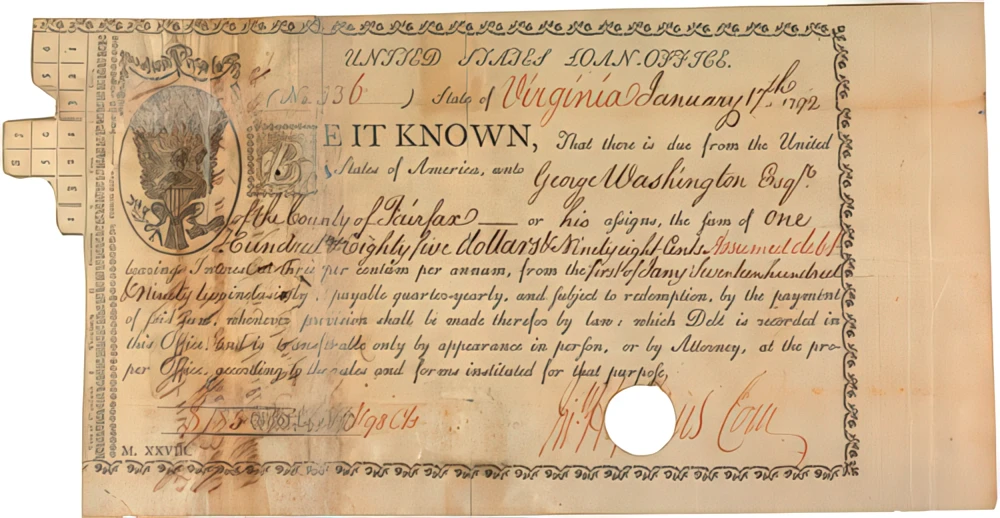
This bond, dated January 17, 1792, was owned and signed by George Washington while he was President. It is for $185.98 of Assumed Debt; interest was paid from January 1, 1792.
This was part of Alexander Hamilton's plan for liquidating the debt of the individual states and funding the national debt. By endorsing the back of the bond with his signature, Washington also endorsed the new republic and placed his faith in its future.
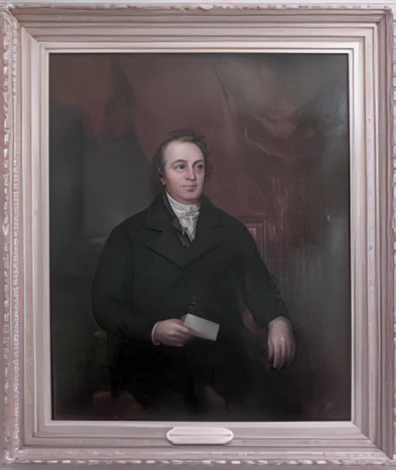
Oliver Wolcott, Jr. was the new nation’s second Treasury Secretary, the second of two men to serve in that position under President George Washington, and the first of two men to serve under President John Adams. Born in Litchfield, Connecticut in 1760 to a man who would later sign the Declaration of Independence, Wolcott graduated from Yale in 1778 despite serving in the Continental Army from 1777 to 1779. He later studied law and passed the bar in 1781 but spent much of the 1780s trying to disentangle wartime accounts. He became Connecticut’s state comptroller in 1789, then moved to the new federal government, first as auditor, then as comptroller, and finally, after Hamilton’s resignation, as Treasury Secretary.
With continued advice from Hamilton, Wolcott attempted to run small surpluses whenever possible and succeeded in doing so in 1796, 1797 and 1798, and ran an almost perfectly balanced budget in 1800. As a result, the nominal national debt was virtually unchanged over his tenure, starting at $83.76 million in 1795 and ending at $83.04 million in 1800. Because of the rapidly expanding and growing economy of the 1790s, however, the real national debt dropped from 22% to 17.5% of GDP during his term despite the fact that government expenditures as a percent of GDP grew from just under 2% to over 2.25% over that same span.
After leaving Adams’s cabinet at the end of 1800 due to the withering attacks of Jeffersonians, Wolcott ran a mercantile operation in New York until retiring to his Litchfield farm in 1815. In 1817, he started a decade-long stint as governor of Connecticut, a position previously held by his father and grandfather. He died in 1833, the final surviving member of Washington’s cabinet, in New York City but was buried in Litchfield.