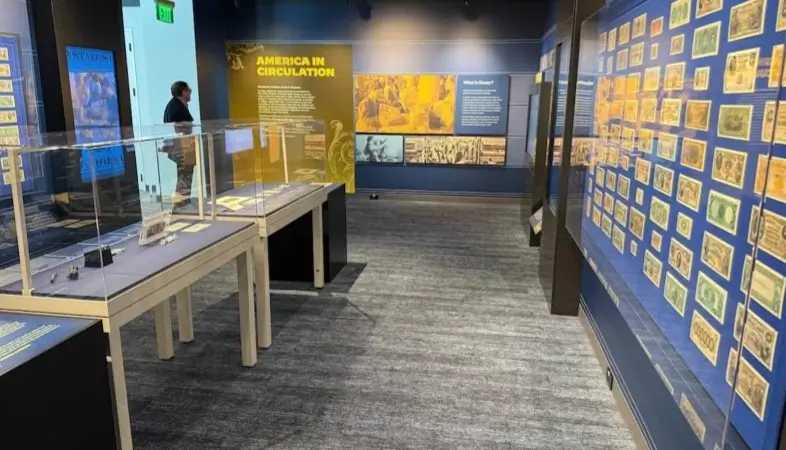
 Photo by Scott Kirsner, MassLive
If you enjoy earning money, spending money, investing money or just ogling historic bills, a new museum in Boston’s Seaport neighborhood has your number.
The Museum of American Finance opens Friday, July 3. And dropping by won’t dent your bank account; admission is free.
The museum originally opened in 1989 in lower Manhattan, and occupied several locations around Wall Street until 2018, when a water main break forced it to close.
Deputy director Kristin Aguilera said that a lengthy search for a new home led the museum to Commonwealth Pier, a recently redeveloped harborfront site owned by the Massachusetts Port Authority and long occupied by Fidelity Investments. Three financial services firms headquartered in Boston — Fidelity, MassMutual and State Street — have been major supporters of the museum.
Here are seven cool things you'll find in the new museum:
• The first authorized lottery ticket sold in Colonial America, from 1744. It was created to raise money for Massachusetts' defense.
• A blank check that was carried by John F. Kennedy's Secret Service detail on the day he was assassinated. Kennedy typically kept a pre-signed check ready for personal expenses on his trips.
• Pine tree shillings, produced in Massachusetts in the 1650s. These were the first coins minted in Colonial America.
• A timeline of financial innovations that were born in Massachusetts, including the first mutual fund, the first venture capital firm and the first exchange-traded fund (but not the Ponzi scheme, which Charles Ponzi ran in Downtown Boston in the 1920s).