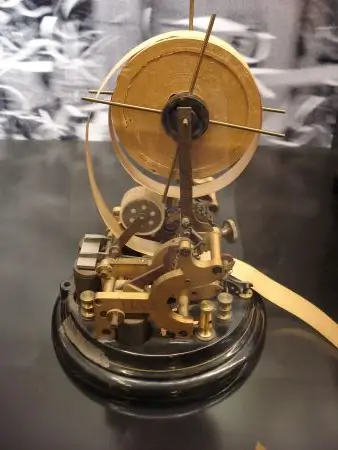
 Edison Universal stock ticker, circa 1870s.
Knicks fans are flocking to lower Manhattan on Thursday to celebrate the New York Knicks winning the National Basketball Association (NBA) championship—the team’s first title in more than a half-century—with a distinctly New York City tradition: a ticker-tape parade.
But what even is ticker tape? And why do New Yorkers throw it at parades? It’s more important to the country’s history than you might think.
Ticker-tape parades started in 1886, when New York City celebrated the dedication of the Statue of Liberty. Then Manhattan workers threw bits of paper—ticker tape—like wedding confetti from office building windows as the parade passed below them. The parade route along Broadway has since become known as the “Canyon of Heroes”—and the ticker-tape tradition has stuck.
“When the Knicks won, and I heard that they were going to have a ticker-tape parade, I thought, ‘Oh, my god, ticker tape—good grief, nobody even knows what that is anymore,’” jokes Joseph Janes, an associate professor at the University of Washington Information School and host of the podcast Documents That Changed the World.
Ticker tape gets its name from the stock ticker, or stock printer, a kind of telegraph machine that was first invented in 1867 by the American Telegraph Company’s Edward A. Calahan—who created a design that was later improved upon by Thomas Edison. Stock printers received information about stock prices over telegraph wires and printed them out on a ribbon of paper—ticker tape. The name “ticker” caught on because of the tick tick tick sound the device made while printing, Janes says.
“Prior to tickers, you needed to be either close to a stock exchange or in the stock exchange to get any idea of what current market prices were,” says Kristin Aguilera, deputy director of the Museum of American Finance in Boston. “If you were not in one of those areas, you would have to wait until they printed the stock prices at the end of each day and then wait to receive it by mail, messenger, carrier pigeon [or] flag signals,” she says.
At the time, the stock ticker, which worked using preexisting telegraph lines, was a “huge innovation,” she says. For the first time, people could transmit stock prices in “very close to real time,” Aguilera says. By the turn of the century, tickers were everywhere—in brokerages, wealthy investors’ homes, news offices, and more, she says. “Anybody who needed access to up-to-date financial information would have a ticker.”